


Auditorium Chair PM-A128
Premium Auditorium Seating with Concealed Retractable Writing Tablet
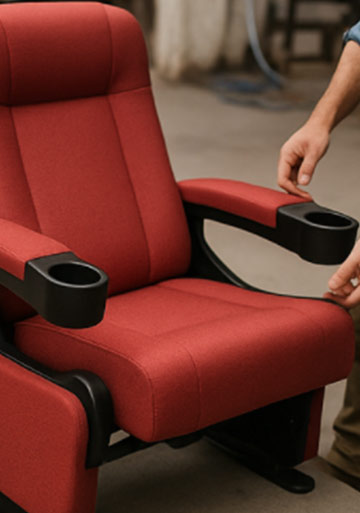
Designed for modern lecture halls, universities, training centers, and conference venues, this premium auditorium chair combines ergonomic styling, comfortable cushioning, practical writing functionality, and a reinforced internal support structure.
The seat and back feature high-quality PP outer shells with distinctive molded groove details, creating a modern and sophisticated appearance. Both are upholstered with premiu
Key Features
1. High-Resilience Cold-Molded PU Foam
Both the seat and back cushions use high-resilience cold-molded PU foam, formed as integrated cushioning components.
- Seat foam density: 40–45 kg/m³
- High elasticity and comfortable support
- Designed to resist deformation during extended use
- Durable cushioning for frequent commercial applications
2. Ergonomic PP Seat and Back Shells
The seat and back outer shells are manufactured from high-quality polypropylene (PP) using precision molds.
Their three-dimensional, ergonomically inspired design combines functional support with a distinctive modern appearance.
- Seat shell dimensions: 460 × 433 × 105 mm (±5 mm)
- Back shell dimensions: 810 × 470 × 92 mm (±5 mm)
- 11 decorative grooves on the seat shell
- 7 decorative grooves on the back shell
The molded groove details add visual depth and give the chair a distinctive appearance.
3. Premium Upholstery Fabric
The seat, back, and side panels are covered with premium Yida upholstery fabric, with additional soft wadding underneath for a more comfortable touch.
The fabric receives anti-static and moth-resistant treatments and is selected for durability in auditorium seating applications.
- Comfortable hand feel
- Wear-resistant upholstery
- Anti-static treatment
- Moth-resistant treatment
- Designed to resist wrinkling, pilling, and fading during long-term use
4. Concealed Retractable Writing Tablet
One of the most distinctive features of this chair is its independently developed concealed retractable writing tablet.
The writing tablet can be stored underneath the armrest area when not in use, helping maintain a clean and organized seating layout.
- Aluminum alloy connecting head and supporting bracket
- Die-cast aluminum alloy connecting components
- ABS composite writing surface
- Mechanical fastening with high-strength bolts
- Designed for secure and stable connection
- Noise-reduction design during opening and closing
- Smooth operation without noticeable rebound or impact noise
This practical feature makes the chair particularly suitable for university lecture halls, classrooms, training centers, and conference venues.
5. Imported Solid Wood Armrests
The armrest surfaces are made from imported solid wood and finished through five stages of polishing and sealing.
Taiwan-imported Dabao paint is used to create a refined protective finish.
The natural wood texture adds warmth and elegance to the chair's modern PP and metal construction.
6. Reinforced Steel Chair Legs
The chair legs are manufactured from 2.0mm thick high-quality steel plate through stamping, welding, and grinding.
The metal components receive anti-oxidation surface treatment followed by high-temperature powder coating.
This multi-stage process helps provide a durable finish for demanding public seating environments.
7. Independent Reinforced Seat Support Structure
Key Structural Advantage
Unlike conventional auditorium chairs that rely heavily on the plastic seat shell to carry the seating load, this design uses an independent reinforced internal metal support structure.
The internal seat support bracket measures 200 × 50 × 30 mm and has a specified load-bearing capacity of 250 kg or above.
Key advantages:
- Main seating load is transferred to the internal support frame.
- PP seat and back shells primarily serve decorative and enclosure functions.
- Reduces excessive stress on the plastic shells.
- Reinforced support design for repeated daily use.
This structural approach helps address a common weakness in conventional plastic-shell auditorium seating designs.
8. Torsion Spring Seat-Return Mechanism
The seat-return system combines a torsion spring mounted on the seat support cross shaft with rubber cushioning components.
The mechanism is designed to provide:
- Accurate seat positioning
- Smooth automatic return
- Reduced impact noise
- Quiet operation
- Reduced mechanical impact during repeated use
The internal limiting support structure helps guide and stabilize the seat-return movement.
9. Secure Floor-Mounting System
The chair is fixed to the floor using hexagonal cylindrical-head self-tapping screws together with dedicated adhesive expansion anchors.
This mounting arrangement is designed to provide a secure connection between the chair and the floor.
Recommended Applications
- University lecture halls
- School auditoriums
- Training centers
- Conference and meeting halls
- Educational institutions
- Multipurpose halls
- Corporate presentation rooms
- Public assembly venues
Auditorium Seating FAQ
What is auditorium seating?
Auditorium seating refers to fixed public seating designed for:
· Auditoriums
· Conference halls
· Performing arts centers
· Music halls
· Government halls
· School auditoriums
· Churches
· Multi-purpose halls
These seats are typically installed in rows and fixed to the floor.
What is the standard size of auditorium seating?
Typical auditorium seating dimensions:
· Center-to-center spacing: 550–580 mm
· Seat depth: 700–780 mm
· Total height: 950–1050 mm
· Armrest width: depends on design
Custom dimensions are available.
What is the recommended row spacing for auditorium seating?
Recommended row spacing usually ranges from:
· 850 mm
· 900 mm
· 950 mm
· 1000 mm
The final spacing depends on:
· Seat size
· Walking space
· Local regulations
· VIP comfort requirements
· Hall capacity goals
Which materials are commonly used in auditorium chairs?
Common materials include:
· Cold-rolled steel
· Aluminum alloy
· Molded foam
· PU foam
· Fabric upholstery
· Genuine leather
· Artificial leather
· Wooden armrests
· Polypropylene plastic covers
What foam is used in auditorium seating?
High-density molded cold-cure foam is commonly used.
Advantages:
· Better comfort
· Long lifespan
· Good resilience
· Anti-deformation
· Suitable for high-frequency use
Can auditorium seats be customized?
Yes.
Customization options include:
· Fabric color
· Wood finish
· Seat width
· Cup holders
· Writing tablets
· Embroidery logo
· VIP design
· Seat numbering
· Aisle lighting
· Power outlets
What is gravity return seating?
Gravity return seating means the seat automatically folds back when not in use.
Advantages:
· Cleaner appearance
· Easier cleaning
· Better aisle access
· Lower maintenance
· Quiet operation
Can auditorium chairs be installed on sloped floors?
Yes.
Auditorium seating can be installed on:
· Flat floors
· Sloped floors
· Concrete steps
· Steel platforms
· Wooden risers
Different mounting brackets are available.
How long do auditorium chairs last?
High-quality auditorium seating can typically last:
· 10–20 years
Depending on:
· Usage frequency
· Material quality
· Maintenance
· Installation quality
What fabric is best for auditorium seating?
Popular options include:
· Polyester fabric
· Commercial woven fabric
· Fire-retardant fabric
· Leather upholstery
· PU leather
For public projects, fire-retardant commercial fabric is highly recommended.
What are the advantages of molded foam auditorium seating?
Advantages include:
· Better ergonomic comfort
· Longer lifespan
· Better resilience
· Less deformation
· Higher durability
· More premium appearance
How do you clean auditorium seating?
Cleaning recommendations:
· Vacuum fabric regularly
· Use mild cleaners
· Avoid strong chemicals
· Clean spills immediately
· Check bolts periodically
For leather surfaces:
· Use leather-safe cleaners
· Avoid direct sunlight exposure


 Copy product links
 Long by picture save/share
INQUIRY


Add Successfully
INQUIRY
Add Successfully
Thank you for your interest in Foshan Promix Furniture Co., Ltd.
Please feel free to reach out to us for any inquiries, quotes, or collaboration opportunities.
Our team will respond to your message within 24 hours.
 Telephone: +86 17769664260
 Email: annypmfurniture@gmail.com
 No.628,Xingtan ShuixiangAvenue,Shunde District, Foshan City,Guangdong Province, China
Products
——
Office Chairs
Waiting Benches
Our work
——





点击右上角
分享给朋友吧
Sitemap | Copyright & MySite Ltd. copy; 2016. all rights reserved.
