


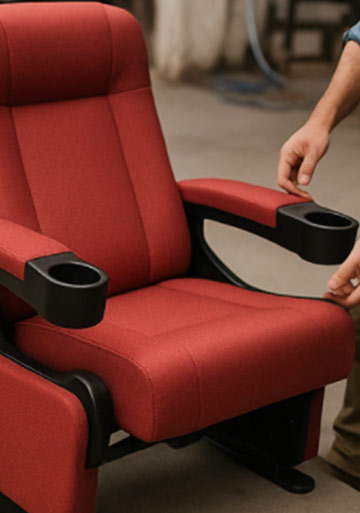
Auditorium Chair PM-L06
Key Features
● Gas-Assisted Slow-Return System
Seat auto-retracts smoothly in ~2 seconds (optional 0.6s fast-return). Gas-assist + damping ensures silent, safe, and maintenance-free operation.
● Multi-Material Back & Seat Panel Options
Choose high-density MDF or ABS with a fireproof surface and PU soft edges. Wear-resistant, impact-resistant, and suitable for high-traffic lecture halls.
● One-Piece Die-Cast Aluminum Tablet Arm
Strong, lightweight, and durable. Offers stable support for books, notebooks, or tablets. Optional oak/beech wood writing surface or wood veneer finish.
● High-Strength Steel Chair Frame
Built with robot-welded hot-rolled steel, providing structural stability, anti-rust performance, and long service life.
● Comfortable High-Density PU Foam
Seat foam: 60 kg/m³, back foam: 45 kg/m³. Breathable, anti-static, shock-absorbing, and resistant to long-term deformation.
● Hardwood Plywood Core
Hot-pressed and coated with eco-friendly lacquer. Prevents moisture absorption, warping, and fading.
● Premium Upholstery Options
Wear-resistant textile with a smooth, stain-resistant surface. Optional double-layer cushion design for enhanced comfort and aesthetics.
● Silent Dual-Spring + Damping Seat Return
Ensures quiet, smooth folding of the seat. Load stress is transferred to the frame—not the foam—greatly extending lifespan and comfort.
● Ideal for Education & Public Venues
Perfect for lecture halls, auditoriums, training centers, theaters, and government facilities seeking long-lasting ergonomic seating.
Auditorium Seating FAQ
What is auditorium seating?
Auditorium seating refers to fixed public seating designed for:
· Auditoriums
· Conference halls
· Performing arts centers
· Music halls
· Government halls
· School auditoriums
· Churches
· Multi-purpose halls
These seats are typically installed in rows and fixed to the floor.
What is the standard size of auditorium seating?
Typical auditorium seating dimensions:
· Center-to-center spacing: 550–580 mm
· Seat depth: 700–780 mm
· Total height: 950–1050 mm
· Armrest width: depends on design
Custom dimensions are available.
What is the recommended row spacing for auditorium seating?
Recommended row spacing usually ranges from:
· 850 mm
· 900 mm
· 950 mm
· 1000 mm
The final spacing depends on:
· Seat size
· Walking space
· Local regulations
· VIP comfort requirements
· Hall capacity goals
Which materials are commonly used in auditorium chairs?
Common materials include:
· Cold-rolled steel
· Aluminum alloy
· Molded foam
· PU foam
· Fabric upholstery
· Genuine leather
· Artificial leather
· Wooden armrests
· Polypropylene plastic covers
What foam is used in auditorium seating?
High-density molded cold-cure foam is commonly used.
Advantages:
· Better comfort
· Long lifespan
· Good resilience
· Anti-deformation
· Suitable for high-frequency use
Can auditorium seats be customized?
Yes.
Customization options include:
· Fabric color
· Wood finish
· Seat width
· Cup holders
· Writing tablets
· Embroidery logo
· VIP design
· Seat numbering
· Aisle lighting
· Power outlets
What is gravity return seating?
Gravity return seating means the seat automatically folds back when not in use.
Advantages:
· Cleaner appearance
· Easier cleaning
· Better aisle access
· Lower maintenance
· Quiet operation
Can auditorium chairs be installed on sloped floors?
Yes.
Auditorium seating can be installed on:
· Flat floors
· Sloped floors
· Concrete steps
· Steel platforms
· Wooden risers
Different mounting brackets are available.
How long do auditorium chairs last?
High-quality auditorium seating can typically last:
· 10–20 years
Depending on:
· Usage frequency
· Material quality
· Maintenance
· Installation quality
What fabric is best for auditorium seating?
Popular options include:
· Polyester fabric
· Commercial woven fabric
· Fire-retardant fabric
· Leather upholstery
· PU leather
For public projects, fire-retardant commercial fabric is highly recommended.
What are the advantages of molded foam auditorium seating?
Advantages include:
· Better ergonomic comfort
· Longer lifespan
· Better resilience
· Less deformation
· Higher durability
· More premium appearance
How do you clean auditorium seating?
Cleaning recommendations:
· Vacuum fabric regularly
· Use mild cleaners
· Avoid strong chemicals
· Clean spills immediately
· Check bolts periodically
For leather surfaces:
· Use leather-safe cleaners
· Avoid direct sunlight exposure


 Copy product links
 Long by picture save/share
INQUIRY


Add Successfully
INQUIRY
Add Successfully
Thank you for your interest in Foshan Promix Furniture Co., Ltd.
Please feel free to reach out to us for any inquiries, quotes, or collaboration opportunities.
Our team will respond to your message within 24 hours.
 Telephone: +86 17769664260
 Email: annypmfurniture@gmail.com
 No.628,Xingtan ShuixiangAvenue,Shunde District, Foshan City,Guangdong Province, China
Products
——
Office Chairs
Waiting Benches
Our work
——





点击右上角
分享给朋友吧
Sitemap | Copyright & MySite Ltd. copy; 2016. all rights reserved.
