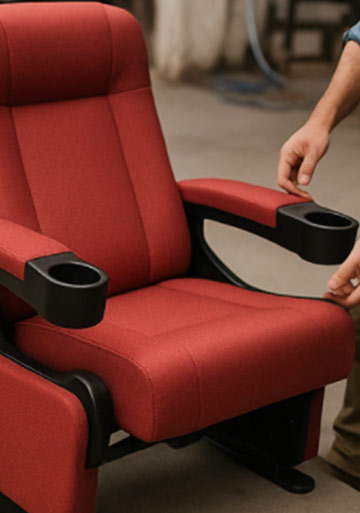
Key Features
- High-Resilience Seat & Back Foam
Cold-cured molded PU foam provides excellent comfort, ergonomic support, and long-term shape retention without deformation.
- Durable Aluminum Alloy Armrests
One-piece stamped aluminum alloy with ultrasonic oxidation treatment ensures high strength, corrosion resistance, and long service life.
- Premium Upholstery Fabric
High-quality linen fabric with mercerized cotton padding on the backrest delivers a soft touch, enhanced comfort, and refined appearance.
- Independent Round Base Structure
Thick cold-rolled steel plate construction ensures strong stability, excellent load-bearing performance, and long-term durability.
- Elegant Armrest Finish
Multiple sanding and sealed painting processes create a smooth, durable, and premium surface texture.
- Gravity-Based Seat Return System
Reliable gravity return mechanism ensures smooth, quiet, and long-lasting seat folding performance with minimal maintenance.
- Modern & Stable Design
Engineered for high-traffic public environments, combining durability, comfort, and contemporary aesthetics.
Recommended Applications
- Auditoriums
- Lecture Halls
- Universities & Colleges
- Conference Halls
- Training Centers
- Seminar Rooms
- Government Halls
- Multi-purpose Event Spaces
Auditorium Seating FAQ
What is auditorium seating?
Auditorium seating refers to fixed public seating designed for:
· Auditoriums
· Conference halls
· Performing arts centers
· Music halls
· Government halls
· School auditoriums
· Churches
· Multi-purpose halls
These seats are typically installed in rows and fixed to the floor.
What is the standard size of auditorium seating?
Typical auditorium seating dimensions:
· Center-to-center spacing: 550–580 mm
· Seat depth: 700–780 mm
· Total height: 950–1050 mm
· Armrest width: depends on design
Custom dimensions are available.
What is the recommended row spacing for auditorium seating?
Recommended row spacing usually ranges from:
· 850 mm
· 900 mm
· 950 mm
· 1000 mm
The final spacing depends on:
· Seat size
· Walking space
· Local regulations
· VIP comfort requirements
· Hall capacity goals
Which materials are commonly used in auditorium chairs?
Common materials include:
· Cold-rolled steel
· Aluminum alloy
· Molded foam
· PU foam
· Fabric upholstery
· Genuine leather
· Artificial leather
· Wooden armrests
· Polypropylene plastic covers
What foam is used in auditorium seating?
High-density molded cold-cure foam is commonly used.
Advantages:
· Better comfort
· Long lifespan
· Good resilience
· Anti-deformation
· Suitable for high-frequency use
Can auditorium seats be customized?
Yes.
Customization options include:
· Fabric color
· Wood finish
· Seat width
· Cup holders
· Writing tablets
· Embroidery logo
· VIP design
· Seat numbering
· Aisle lighting
· Power outlets
What is gravity return seating?
Gravity return seating means the seat automatically folds back when not in use.
Advantages:
· Cleaner appearance
· Easier cleaning
· Better aisle access
· Lower maintenance
· Quiet operation
Can auditorium chairs be installed on sloped floors?
Yes.
Auditorium seating can be installed on:
· Flat floors
· Sloped floors
· Concrete steps
· Steel platforms
· Wooden risers
Different mounting brackets are available.
How long do auditorium chairs last?
High-quality auditorium seating can typically last:
· 10–20 years
Depending on:
· Usage frequency
· Material quality
· Maintenance
· Installation quality
What fabric is best for auditorium seating?
Popular options include:
· Polyester fabric
· Commercial woven fabric
· Fire-retardant fabric
· Leather upholstery
· PU leather
For public projects, fire-retardant commercial fabric is highly recommended.
What are the advantages of molded foam auditorium seating?
Advantages include:
· Better ergonomic comfort
· Longer lifespan
· Better resilience
· Less deformation
· Higher durability
· More premium appearance
How do you clean auditorium seating?
Cleaning recommendations:
· Vacuum fabric regularly
· Use mild cleaners
· Avoid strong chemicals
· Clean spills immediately
· Check bolts periodically
For leather surfaces:
· Use leather-safe cleaners
· Avoid direct sunlight exposure



 Copy product links
 Long by picture save/share


 Telephone: +86 17769664260
 Email: annypmfurniture@gmail.com
 No.628,Xingtan ShuixiangAvenue,Shunde District, Foshan City,Guangdong Province, China